Post
Breguet Type XXI
May
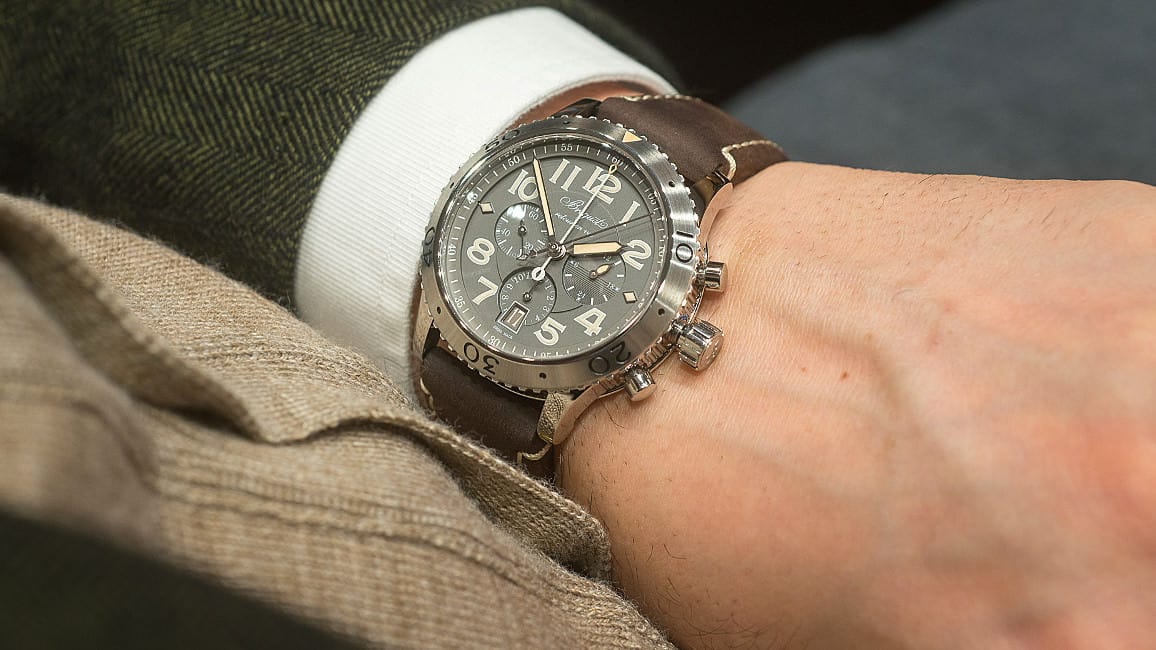
The Breguet Type XXI is not merely a pilot’s watch; it is a piece of aviation history. Breguet, the legendary brand founded by Abraham-Louis Breguet in 1775, is best known for its exquisite dress watches, tourbillons, and classical designs. Yet in the 20th century, Breguet also supplied cockpit instruments and chronographs to the French naval air force (Aéronavale). The Type XX line was born from this military specification in the 1950s. . Wearing a Type XXI means wearing a watch with both military provenance and haute horlogerie pedigree.
1. The Historical Type XX: A French Military Icon
In the 1950s, the French Ministry of Defense issued a specification for a pilot’s chronograph that could be used by naval aviators. The requirements: a flyback function (reset to zero without stopping), a rotating bezel, excellent legibility, and robust construction. Several brands competed, but Breguet’s Type XX was among the selected. The Type XX was produced in various iterations (from the 1950s to 1980s) and became the official watch of the French naval air force. These early Type XX watches are now highly collectible, often selling for $20,000–$40,000. The modern Type XXI is a direct descendant, honoring the original while updating the movement and design for contemporary tastes.
2. The Flyback Function: A Pilot’s Essential
The flyback chronograph is the Type XXI’s most important feature. In a standard chronograph, you must stop the timer, reset it, and then restart it. With a flyback, you can press the reset button while the chronograph is running, and it instantly resets to zero and restarts — a crucial function for pilots navigating multiple waypoints or timing successive maneuvers. The Type XXI’s flyback mechanism operates smoothly, with a crisp, satisfying button feel. This complication is a hallmark of pilot’s watches and adds significant functionality and mechanical complexity.
3. The Calibre 584Q/2: Modern In-House Movement
The Type XXI is powered by the Breguet Calibre 584Q/2, an automatic flyback chronograph movement developed in-house (based on the Lemania 1350 architecture, but heavily modified by Breguet). It features a 48-hour power reserve, 28,800 vph (4 Hz), a 60-minute totalizer at 3 o’clock, a 12-hour totalizer at 6 o’clock, and a date window at 4:30. The movement is decorated with Côtes de Genève, perlage, and a circular-grained mainplate.
• Movement: Calibre 584Q/2, automatic flyback chronograph, 48h power reserve
• Frequency: 28,800 vph (4 Hz) with column wheel and vertical clutch
• Water resistance: 100 meters (10 ATM) — suitable for swimming
• Case diameter: 42mm · thickness: 14.9mm (due to domed crystal)
• Case material: Titanium (ref. 3817) or 18k rose gold (ref. 3815)
• Bezel: Bidirectional with 60-minute graduation (fluted edge)
• Crystal: Domed sapphire with anti-reflective coating
• Dial: Black or silver with engine-turned center (Clous de Paris)
• Hands: Breguet-style open-tipped (blue steel or gold)
• Strap: Leather (crocodile) or NATO
• Special: Flyback chronograph, screw-down crown, coin-edge caseband
4. Design: Honoring the 1950s Original
The Type XXI’s design pays homage to the 1950s Type XX. The 42mm case (available in titanium or rose gold) features the Breguet “coin-edge” fluting on the caseband — a signature from Breguet’s pocket watch era. The bezel is bidirectional, with a 60-minute graduation, and has a fluted edge for grip. The dial is black or silver, with an engine-turned center (Clous de Paris) — a refined touch unusual for a pilot watch. The hands are Breguet’s iconic “open-tipped” (pomme) style, in blued steel (titanium model) or gold (rose gold model).
5. Titanium vs. Rose Gold: Two Distinct Personalities
The Type XXI is available in two main materials:
• Titanium (Ref. 3817): Very lightweight, matte grey, anti-magnetic, scratch-resistant — perfect for a daily-wear tool watch. The titanium version feels modern, stealthy, and comfortable.
• 18k Rose Gold (Ref. 3815): Heavy, luxurious, warm in color, with a brown dial — more dressy, more heirloom. The rose gold version is for those who want the Type XXI as a statement piece.
Both use the same movement, have the same water resistance, and are 42mm. The titanium version is more popular among watch enthusiasts due to its practicality and lower price (around $14,000 vs. $35,000+ for gold).
6. The Type XXI in the Breguet Lineup: Between Sport and Elegance
Breguet’s collection is dominated by classic dress watches (Classique, Heritage, Reine de Naples). The Type XXI is the brand’s dedicated sports and pilot watch, alongside the Type XX (a modern reissue of the original manual-wind flyback) and the Type XXII (with a 10Hz high-frequency movement). The Type XXI sits in the middle: automatic, flyback, large case, but not overly technical. It appeals to collectors who admire Breguet’s history and finishing but want a watch they can wear casually.
7. Wearing the Type XXI: The Feel of History
Put on a Type XXI, and you feel the heritage. The titanium model is surprisingly light (about 85g on strap). The case is comfortable, thanks to the short, curved lugs. The domed sapphire crystal gives a vintage feel. The bezel clicks positively (bidirectional, no detent — continuous turn). The crown is easy to operate. The flyback chronograph is addictive: press the lower pusher, and the seconds hand instantly resets and restarts.
8. The Type XXI vs. Competitors: IWC Pilot, Breitling Navitimer, Omega Speedmaster
The Type XXI competes in the luxury pilot chronograph segment. Its main rivals:
• IWC Pilot’s Chronograph (e.g., Le Petit Prince): similar price (around $8,000-$12,000), but uses a modified Valjoux 7750, no flyback, more tool-like. IWC has a stronger pilot branding, but Breguet has higher finishing and heritage.
• Breitling Navitimer B01: $8,000-$10,000, in-house movement, slide rule bezel, iconic design, but no flyback. The Navitimer is more complex visually; the Type XXI is cleaner.
9. The Type XXI in Pop Culture and Collecting
The Type XXI is not a celebrity watch; it is a connoisseur’s choice. It has appeared in niche aviation magazines and is beloved by pilot watch enthusiasts. Breguet sponsors the Paris Air Show and has historical ties to the French Air Force. Collecting Type XXI: the titanium 3817 is the most popular and holds its value reasonably well (60-75% of retail after 5 years). Limited editions (e.g., “Type XXI 100th anniversary of aviation”) are more collectible. The rose gold version depreciates more steeply but is rarer. The original Type XX vintage models are the true blue-chip investments.
10. The Movement: Finishing and Performance
The Calibre 584Q/2 is not heavily skeletonized, but it is beautifully decorated: Côtes de Genève on the bridges, perlage on the mainplate, polished bevels, and blued screws. The gold rotor is skeletonized, bearing the Breguet engraving. The movement is chronometer-certified? Not officially, but Breguet regulates it to within -3/+7 seconds per day (similar to COSC). The 48-hour power reserve is modest by modern standards (some competitors offer 70+ hours). However, the flyback function and column wheel make the chronograph experience superior. The movement’s reliability is proven; Breguet’s service network is excellent.
11. The Type XXII: The High-Frequency Alternative
For those who want the ultimate in precision, Breguet offers the Type XXII (Ref. 3880). This watch features a 10Hz (72,000 vph) high-frequency movement, allowing the chronograph to measure 1/20th of a second. The seconds hand sweeps incredibly fast. The XXII is larger (44mm) and more expensive ($20,000+). It is a technical marvel, but lacks the classic proportions of the Type XXI.
12. Strap and Bracelet: Versatility
The Type XXI comes on a leather strap (crocodile) with a pin buckle or folding clasp. The strap is comfortable but not meant for water activities (despite the 100m water resistance). Many owners add a rubber or NATO strap for a sportier look. Breguet also offers a metal bracelet (optional), but it is rare. The lugs are 22mm, so aftermarket options abound.
13. Servicing and Long-Term Ownership
Breguet recommends servicing the Type XXI every 3-5 years (though 5-7 is fine). Service cost: $800-$1,200 (through Breguet/Swatch Group). The movement is complex (flyback, column wheel), but any Breguet-authorized service center can handle it. The watch is durable; the sapphire crystal is hard, and the titanium case resists scratches. The crown and pushers are well-sealed. With proper care, a Type XXI will outlive its owner and maintain strong resale value.
14. Why Choose a Type XXI Over a Vintage Type XX?
Vintage Type XX watches are historically fascinating, but they come with risks: unknown service history, non-original parts, high prices ($15k-40k), and smaller cases (38-40mm). The modern Type XXI offers a larger, more contemporary case, a reliable in-house movement, a sapphire crystal, a display caseback, and a warranty. For most buyers, the modern watch is the smarter choice. For purists, the vintage Type XX is the grail.
15. Conclusion: A Pilot’s Watch for Connoisseurs
The Breguet Type XXI is a rare breed: a pilot’s chronograph that is also a work of art. It marries the functional requirements of a flyback chronograph with the aesthetic grace of Breguet’s historic designs. The coin-edge case, the engine-turned dial, the blued Breguet hands — all details that elevate it above the competition. It is not the most famous pilot watch, but it is arguably the most refined. For the collector who values heritage, craftsmanship, and understated luxury, the Type XXI is a perfect choice. Put it on, and you join a lineage of French naval aviators — and a brand that has defined watchmaking for over two centuries. It is, without question, a modern classic.
